 Web HostingBudget-friendly shared hosting plans
 Domains SearchFrom .com to unique country domains, explore and register extensions worldwide.
 WordPress HostingPower your blog or business with WordPress hosting.
 Email HostingSimple, secure email hosting that helps you stay connected and professional.
 Reseller HostingStart your own hosting business with easy and reliable reseller hosting plans.
 AffiliateJoin our affiliate program and earn commissions every time you bring in new customers.
 cPanel HostingHosting powered by cPanel, the world’s most user-friendly control panel.
 Windows HostingBuilt for Windows applications and websites
 IN Domain PricesDon’t miss out on the best domain deals in India!
 WHOIS LookupFind out who owns a domain name with a quick and easy WHOIS search.
 Domain TransferTransfer your domain to us and enjoy reliable support every step of the way.
 .Com DomainGet the most trusted domain for worldwide credibility
 All TldsSearch and register domain extensions worldwide.
 SSL CertificatesProtect your website with trusted SSL certificates and keep customer data safe.
 VPS HostingPowerful virtual servers. Full root access. Reliable uptime.
 Managed VPS HostingNot a tech expert? Choose our fully managed VPS service.
 Dedicated ServersTake full power and total control of your own physical server.
 AI Website BuilderCreate stunning websites instantly with our easy AI builder.
 Online ShopBuild your eCommerce store easily, no coding, just growth.
 Web Design ServicesGet a website built for your brand and designed for your goals.
 Contact UsReach out to us for support or questions.
 SupportGet answers and how-to guides for all our services.
 BlogRead our latest blogs on web hosting, online business, digital marketing, and other helpful topics.
If you’re in the Indian e-commerce business, you’ve probably realized that selling online isn’t just about listing products.
You want more control over your brand, better profit margins, and long-term customer relationships.
You are not alone in this.
According to a Feb 2026 report by McKinsey & Company, MSMEs in India are increasingly seeking more flexible, direct, and lower-cost pathways to reach consumers.
For e-commerce stores, that means owning your digital storefront.
But a website can’t function alone. You’ll need to choose a web hosting plan.
As such, choosing the right plan is not just a technical decision; it’s a business survival decision.
In this guide, we’ll help you understand how to choose the right web hosting plan for your Indian e-commerce business.
How Does Web Hosting Affect My E-commerce Website?
Your hosting provider is responsible for storing and delivering every part of your website, from product images to checkout pages.
Whenever a customer visits your store, this is what happens behind the scenes:
- Their browser sends a request to your hosting server.
- The server processes the request.
- It retrieves product data, pricing, images, scripts, etc.
- It sends that data back to the visitor’s browser.
The quality of your hosting determines how quickly and reliably this process happens.
Why Is Web Hosting Important For My Indian E-commerce Business?

Web hosting is the foundation of your online store.
In essence, it’s like a land where your digital shop is built. Without strong infrastructure, even the most beautiful store design will fail.
Here’s why hosting matters so much for e-commerce businesses:
1) Website Speed Directly Affects Sales
Website speed affects user psychology and buying behavior.
When customers visit your online store, they expect instant access to products.
Let’s connect speed to revenue:
a) Slow loading reduces product visibility
If pages load slowly, customers view fewer products. Fewer viewed products mean fewer chances of adding items to the cart.
b) Checkout delays increase cart abandonment
If the payment page lags or times out, customers may abandon the purchase out of frustration or fear.
c) Speed influences search engine rankings
Search engines like Google use page speed as a ranking factor. Faster websites are ranked higher because they provide better user experiences.
If your competitor’s website loads faster, Google may rank them above you. That means they get more organic traffic, which translates to more potential sales.
d) Mobile users are sensitive
According to Payments and Commerce Market Intelligence (PCMI), 75% of e-commerce volume in India comes from purchases on mobile devices.
Mobile users often browse at variable network speeds. If your hosting is weak, your site will struggle under these conditions. Consequently, this will lead to lower sales.
2) Uptime Determines Revenue Stability
Uptime refers to how often your website is accessible online. The hosting you choose determines your website’s uptime.
A 99.9% uptime guarantee may sound technical, but it has real business implications.
If your site goes offline:
- Customers can’t browse
- Payments can’t be processed
- Ads continue running (wasting marketing budget)
- Brand credibility drops
Now imagine your site crashing during Diwali sales or a major promotional campaign. Even one hour of downtime could result in significant revenue loss.
3) Security Protects Customer Trust
E-commerce stores collect sensitive user information, like:
- Names and phone numbers
- Addresses
- Payment details
If hackers exploit weak hosting security, the consequences include data leaks, financial loss, and legal risk.
Customers are unlikely to return to a store that compromised their data.
4) Scalability Supports Growth
When your business grows, traffic increases.
Marketing campaigns, influencer partnerships, and seasonal offers can also create traffic spikes.
If your hosting plan cannot handle this increased load, your website may:
- Slow down dramatically
- Fail during checkout
- Crash entirely
This results in reduced conversions.
5) Hosting Impacts Payment Gateway Performance
Payment gateways like Razorpay and PayU rely on stable server communication.
If your hosting environment is weak:
- Transactions may time out
- Payment confirmation pages may fail
- Customers may be charged without confirmation
Even a single failed payment can damage trust and lead to lower conversions over time.
6) Data Backups Protect Your Business Continuity
As you run your e-commerce site, unexpected problems can occur:
- Software errors
- Hacking attempts
- Plugin conflicts
- Accidental file deletion
Without backups, you could lose:
- Customer data
- Product listings
- Website customizations, etc.
Hosting plans that include automatic backups allow you to restore your site quickly without major disruption.
This protects both revenue and reputation.
What Do I Need to Consider When Choosing a Web Hosting Plan?

Choosing a hosting plan for your Indian e-commerce site requires balancing technical and business factors.
Here’s what you should consider:
1) Size of Your Business
Your hosting needs depend heavily on where your business stands.
If you are just launching, chances are:
- Your traffic volume is low
- Your product catalog is limited
- Transactions per day are minimal
In this case, you need a stable but cost-effective infrastructure.
However, if your store already:
- Receives hundreds or thousands of daily visitors
- Has a large product database
- Processes frequent transactions
Then your hosting must handle heavier loads efficiently.
The larger your catalog and the more complex your operations (filters, search functions, dynamic pricing, customer accounts), the more server resources you require.
2) Traffic Expectations and Marketing Plans
Many business owners underestimate traffic growth.
Think ahead:
- Are you planning for paid advertising and aggressive marketing campaigns?
- Will you collaborate with influencers?
- Are you preparing for festive sales like Diwali or New Year?
- Do you plan to scale significantly in the next 6-12 months?
Marketing and promotion activities create traffic spikes.
If your hosting cannot handle sudden surges:
- Pages may load slowly
- Checkout may fail
- Your site may temporarily crash
This results in lost revenue at the exact moment you are trying to maximize sales.
Choose hosting that allows resource scaling without complicated migrations.
3) Budget (Short-Term vs Long-Term Thinking)
Budget is often the first concern for MSMEs.
Many business owners make the mistake of choosing the cheapest option without evaluating long-term impact.
Low-cost hosting may have:
- Slower performance
- Frequent downtime
- Limited scalability
- Poor customer support
These issues can reduce sales and damage your brand reputation, ultimately costing you more than what you saved.
Instead of asking “What is the cheapest plan?” ask:
“What hosting investment will protect my revenue and support my growth?”
Your hosting should be affordable, but never at the expense of reliability.
4) Technical Expertise
You should consider how comfortable you are managing technical systems.
Some hosting environments require you to handle:
- Server configurations
- Performance tuning
- Software updates
- Security settings
- Troubleshooting technical errors
If you or your team do not have technical experience, choosing a setup that demands manual management can create unnecessary stress and risk.
On the other hand, if you have access to a developer or IT team, you may benefit from greater control and customization options.
The key is to align hosting complexity with your operational capacity. You should spend more time growing your business, not fixing server errors.
5) Security and Data Backup
Security is non-negotiable in e-commerce.
Your website handles personal and financial data.
Weak security can lead to:
- Data breaches
- Financial fraud
- Legal penalties
- Permanent brand damage
Your hosting environment should include:
- SSL encryption (HTTPS support)
- Firewall protection
- Malware scanning
- Regular automated backups
- Protection against DDoS attacks.
Strong hosting security protects both your business and your customers.
6) Reliability and Uptime Guarantees
Every minute your website is offline is a lost sales opportunity.
When evaluating reliability, check:
- Uptime guarantees (look for 99.9% or higher). These should be backed with SLAs.
- Infrastructure redundancy
- Server monitoring systems
Reliable hosting ensures your store remains accessible at all times.
7) Customer Support Quality
Technical issues rarely happen at convenient times. You are likely to face problems during high-traffic events.
When that happens, you need immediate assistance.
Evaluate:
- Is support available 24/7?
- Do they offer live chat, phone, or ticket support?
- How fast are response times?
- Do they understand e-commerce environments?
For growing e-commerce sites, responsive support can be the difference between a temporary issue and a major revenue loss.
8) Integration Compatibility
Your hosting environment must support the tools you plan to use, including:
- Indian payment gateways (Razorpay, PayU, Instamojo)
- CMS modules
- Email marketing tools
- Analytics software, etc.
Actually Choosing The Hosting Plan
You’re probably thinking, “Okay, this is all good. But which hosting plan is actually right for me?”
The truth is, there isn’t a one-size-fits-all answer.
The right hosting plan depends on where your e-commerce business stands today and where you want it to go.
Let’s look at the options.
Shared Hosting
If you’re just launching your e-commerce store, shared hosting is usually the most practical starting point.
With shared hosting, your website shares server resources (such as RAM and CPU) with other websites.
You should consider shared hosting if:
- You’re launching your first online store
- You have a small to medium product catalog
- You expect low to moderate daily traffic
- You’re working within a limited startup budget
- You don’t have advanced technical skills
However, note that because resources are shared, performance can fluctuate if traffic spikes. That’s why shared hosting is best for early-stage businesses.
At Truehost, we offer different tiers of shared hosting.
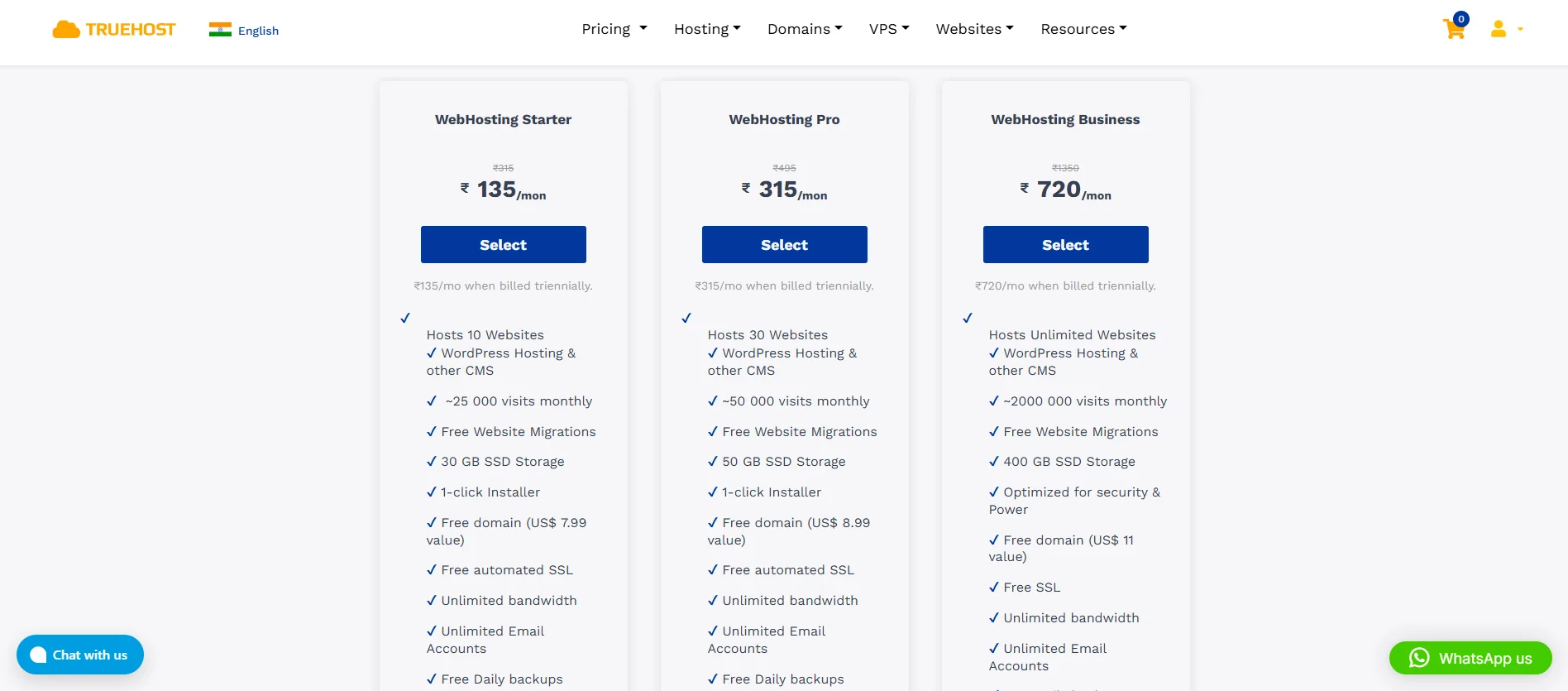
These plans include:
- SSD storage for faster loading speeds
- Free, automated SSL certificates for secure checkouts
- Easy-to-use control panels.
- 1-Click Installers
- Unlimited bandwidth and email accounts
- Free Website Builder
- Free Website Templates
- Python and NodeJS Support
- Free domains
- Free Daily backups
- Free Website Migrations
VPS Hosting
As your business grows, your hosting needs change.
Maybe your ads are driving more traffic. Or maybe you’re preparing for festive campaigns. Or perhaps your product catalog has expanded significantly. And you start noticing slower loading times during peak hours.
This is where VPS (Virtual Private Server) hosting comes in.
With VPS hosting, you still share a physical server, but your website gets dedicated resources. That means your store is not directly competing with others for performance.
You should consider VPS hosting if:
- Your traffic is steadily increasing
- You run regular promotional campaigns
- Your store slows down during peak hours
- You have a larger product database
- You want more control over server settings
At Truehost, VPS hosting is available in both managed and unmanaged options. This gives you the flexibility to choose based on your technical comfort level.
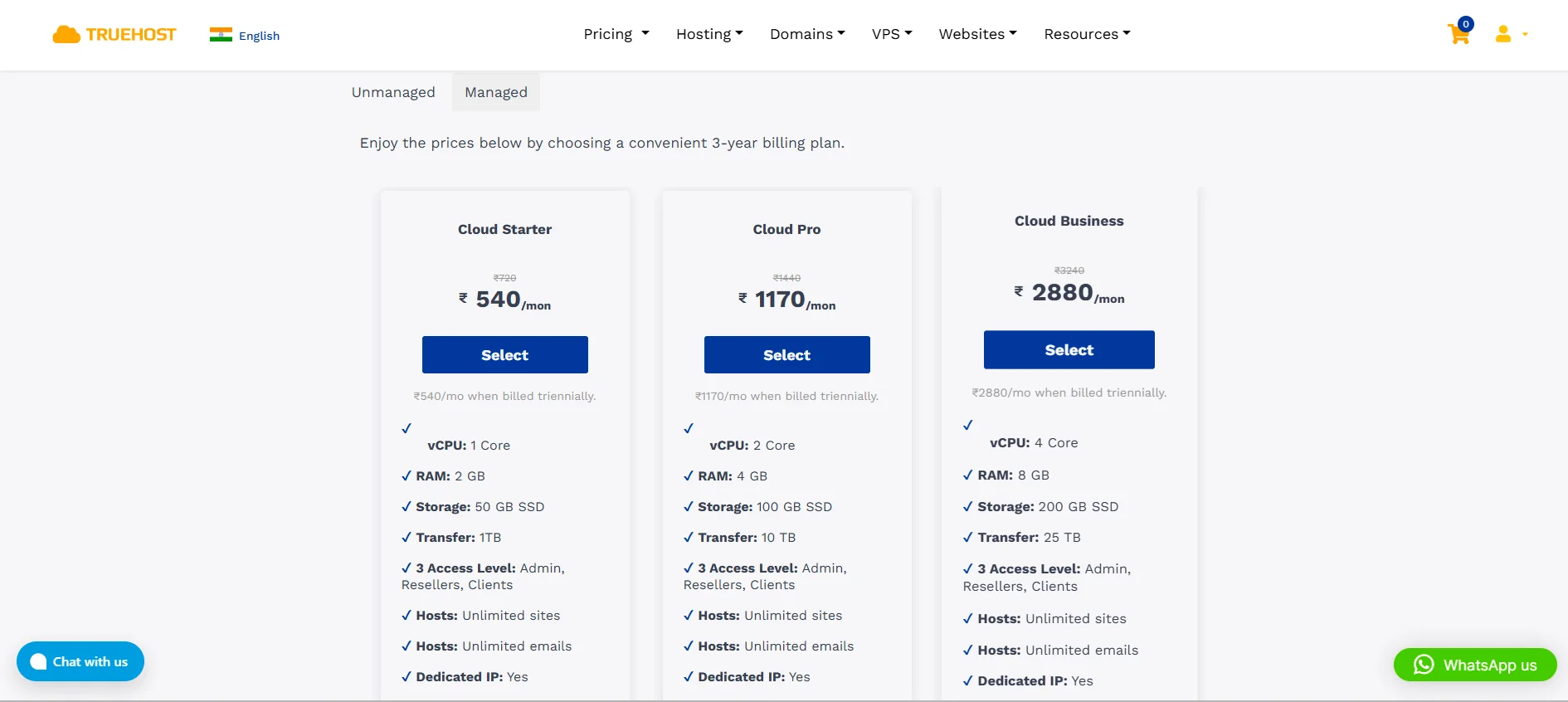
If you choose managed VPS, we will handle:
- Server setup and configuration
- Security updates
- Performance optimization
- Ongoing maintenance
This is ideal if you want better performance but prefer focusing on business operations rather than technical server management.
If you choose unmanaged VPS, you get:
- Full root access
- Greater customization freedom
- Complete control over your server environment
This option is better suited for developers or businesses with in-house technical expertise.
Both VPS options have scalable upgrade paths, ensuring you can easily increase resources without migrating to a new server.
Dedicated Servers
If your e-commerce business is operating at a large scale, shared resources (even virtual ones) may no longer be sufficient.
A dedicated server means the entire physical server is exclusively yours. You don’t share resources with anyone.
This option is best suited for:
- High-traffic e-commerce brands
- Stores processing large volumes of daily transactions
- Businesses with thousands of products
- Companies that require advanced customization
- Brands that cannot afford downtime during peak campaigns
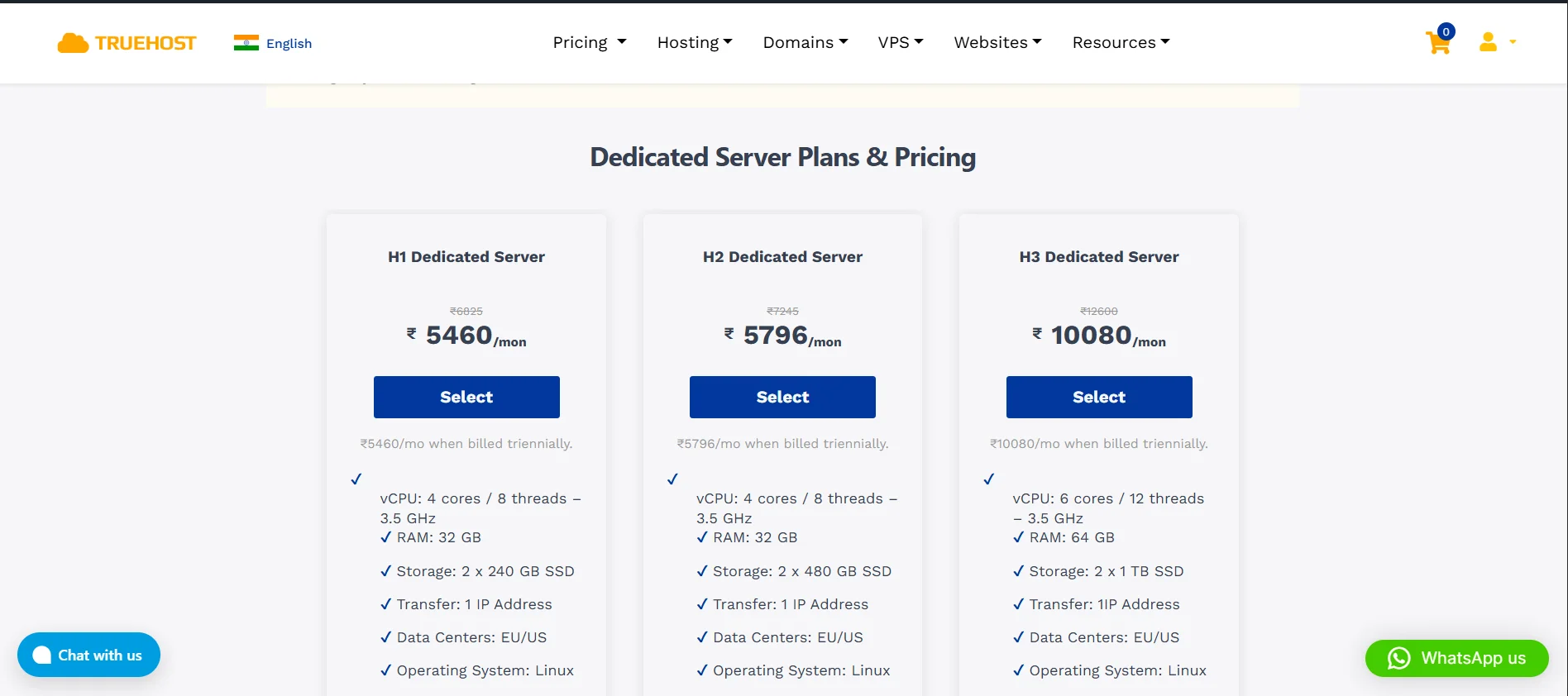
At Truehost, dedicated server plans provide full resource control, high-performance hardware, reliable uptime, and advanced security configurations.
Important notes:
Truehost offers 24/7/365 local support for all our users through live chat, WhatsApp, phone, and email. This makes sure that your Indian e-commerce business receives timely assistance whenever technical issues arise.
We also offer pricing in Indian Rupees (INR). This ensures you don’t have to worry about currency conversion charges, fluctuating exchange rates, or unexpected international transaction fees when budgeting.
To get more information on our services, visit our website’s main page.