 Web HostingBudget-friendly shared hosting plans
 Domains SearchFrom .com to unique country domains, explore and register extensions worldwide.
 WordPress HostingPower your blog or business with WordPress hosting.
 Email HostingSimple, secure email hosting that helps you stay connected and professional.
 Reseller HostingStart your own hosting business with easy and reliable reseller hosting plans.
 AffiliateJoin our affiliate program and earn commissions every time you bring in new customers.
 cPanel HostingHosting powered by cPanel, the world’s most user-friendly control panel.
 Windows HostingBuilt for Windows applications and websites
 IN Domain PricesDon’t miss out on the best domain deals in India!
 WHOIS LookupFind out who owns a domain name with a quick and easy WHOIS search.
 Domain TransferTransfer your domain to us and enjoy reliable support every step of the way.
 .Com DomainGet the most trusted domain for worldwide credibility
 All TldsSearch and register domain extensions worldwide.
 SSL CertificatesProtect your website with trusted SSL certificates and keep customer data safe.
 VPS HostingPowerful virtual servers. Full root access. Reliable uptime.
 Managed VPS HostingNot a tech expert? Choose our fully managed VPS service.
 Dedicated ServersTake full power and total control of your own physical server.
 AI Website BuilderCreate stunning websites instantly with our easy AI builder.
 Online ShopBuild your eCommerce store easily, no coding, just growth.
 Web Design ServicesGet a website built for your brand and designed for your goals.
 Contact UsReach out to us for support or questions.
 SupportGet answers and how-to guides for all our services.
 BlogRead our latest blogs on web hosting, online business, digital marketing, and other helpful topics.
So, you’ve read our guide on how to build a website in 5 steps (or maybe you haven’t).
But you’ve put in the work, built the website, and now you’re ready to make it live.
There are a few important steps between “it’s built” and “it’s live” that most beginners rush through and end up regretting.
That’s exactly why I wrote this article.
Today, we’ll cover the 5 main steps you need to take to make your website live.
Step 1) Pick and Register a Domain Name
A domain name is basically your website address, for example, yourbusiness.co.in.
It’s permanent or at least very hard to change later. This is exactly why it deserves careful thought.
A confusing or forgettable domain name makes it harder for people to find, share, or trust you.
Choosing a Good Domain Name
- Keep it short – Two to three words is ideal. Long domains are hard to remember and easy to mistype.
- Make it easy to spell and say- If you have to spell it out every time someone asks for your website, it’s too complicated.
- Avoid hyphens and numbers – These cause confusion (is it the number 7 or the word seven?).
- Use relevant keywords – If you sell handmade candles, having “candle” or “wax” in your domain helps people immediately understand what you do. It can also slightly help with SEO.
- Align with your brand – Your domain should feel like a natural extension of your business name or personal brand.
- Think long-term – Don’t choose a domain so specific that it boxes you in. bestinidancoffeeblog.co.in is limited if you ever expand to cover all Asian coffees.
Choose the Right Domain Extension
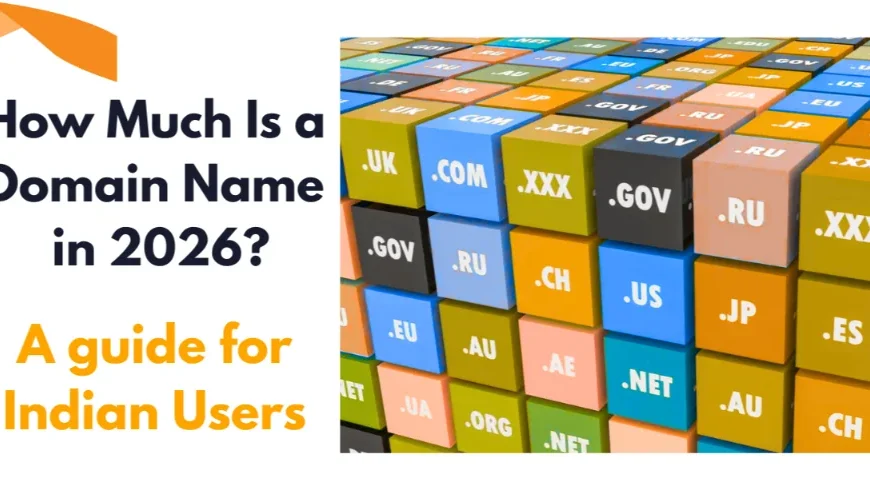
The extension (also called the top-level domain) is the part of your domain name after the dot. For example: .com, .in, .org, .net, etc.
.com is still the gold standard. It’s what people default to typing, and it carries the most credibility.
.in or .co.in is better if you are targeting Indian customers/clients.
You could also try Industry-specific extensions like .store, .tech, .design, or .blog, to signal your niche clearly.
Truehost’s free domain checker allows you to instantly check if your preferred name is available. We also offer the cheapest domain registration in India, with access to more than 500 domain extensions (TLDs).
Step 2) Secure a Hosting Plan
Web hosting is the service that stores your website’s files on a server and makes them accessible to anyone visiting it.
Without hosting, your website simply doesn’t exist on the internet.
If you’re using a website builder like Wix, Squarespace, or Ollit AI, hosting is typically included in your subscription. You don’t need to sort this out separately.
But if you’re building with WordPress or another self-hosted CMS, you’ll need to choose a hosting provider.
You can also choose another hosting provider if you’re using the above; it all depends on you.
Types of Hosting
| Type | What It Is | Best For | Price |
| Shared Hosting | Your site shares server resources with others | Beginners, blogs, low-traffic sites | Very affordable |
| VPS Hosting | Your own dedicated portion of a server | Growing sites, medium traffic | Mid-range |
| Cloud Hosting | Resources spread across multiple servers | High availability, unpredictable traffic spikes | Mid-range |
| Dedicated Hosting | An entire server just for your site | Large sites, maximum performance | Very high |
| Managed WordPress Hosting | Hosting optimized specifically for WordPress | WordPress users who want hands-off management | Varies (but mostly mid) |
Pro Tip: If you’re launching a new website and don’t expect tens of thousands of visitors right away, shared hosting is the smart starting point. It’s cost-effective, beginner-friendly, and capable of handling a new website’s needs.
What to Look for in a Hosting Provider
When comparing providers, check for:
- Uptime guarantee – Look for 99.9% uptime or better. Downtime means your site is inaccessible to visitors.
- Server speed and location – Choose a provider with servers close to your target audience for faster load times.
- Free SSL certificate – SSL is what puts the padlock icon in your browser bar and encrypts data (HTTPS). It’s a ranking factor for Google and a trust signal for visitors. It should be included for free.
- Automatic backups – Your data should be backed up regularly so that if anything goes wrong, you can restore your site quickly.
- Scalability – Make sure you can easily upgrade your plan as your site grows.
- Customer support – 24/7 support via live chat or phone is essential, especially when you’re new to managing a website.
- Free domain – Many providers include a free domain for the first year. Take advantage of this.
Truehost ticks every box on that list, and then some.
We offer a 99.97% uptime guarantee, servers optimized for fast load times, free SSL certificates, and automatic daily backups so your data is always protected.
Our support team is available 24/7 via live chat and phone, and every plan is designed to scale with you as your website grows.
And speaking of growth, you’ll never need to switch providers. We offer the full range, from shared hosting all the way through to VPS, cloud, and dedicated servers.
Step 3) Connect Your Domain to Your Hosting
After you’ve got a domain and hosting, you need to link them. This ensures that when someone types your domain into a browser, it loads your website.
This is done by updating your nameservers in your domain registrar’s settings.
Here’s the process:
- Log in to where you registered your domain
- Go to your DNS or nameserver settings
- Replace the existing nameservers with the ones provided by your hosting company
- Save and wait. DNS changes can take up to 48 hours to propagate, though it’s usually much faster
You can verify your domain is pointing correctly using whatsmydns.net.
If you register both your domain and hosting with Truehost, we will handle the connection for you. We do the heavy lifting, giving you more time to run your business/brand.
Step 4) Add Your Content
Your design gets visitors through the door. Your content is what convinces them to stay, trust you, and take action.
Every website needs content that clearly communicates what you offer and what visitors should do next.
Writing Tips
a) Lead with value – The moment someone lands on your page, they’re asking: Is this for me? Answer that question immediately. Don’t bury what you do in the third paragraph.
b) Be specific – Vague copy loses people. “We offer the best solutions” means nothing. “We build custom furniture for small apartments in Bangalore” is immediately clear and compelling.
c) Every page needs a call-to-action – Whether it’s “Add to Cart,” “Book a Consultation,” “View Our Work,” or “Get a Quote.” Tell visitors exactly what to do. Don’t leave them guessing.
d) Keep it simple – Write the way you speak. If a sentence sounds like it belongs in a legal document, rewrite it.
Visuals
Strong visuals build trust, especially for businesses selling physical products, showcasing creative work, or operating in a competitive market.
a) Use high-quality images that accurately represent your brand and what you offer. Free options are available on Unsplash and Pexels. But real photos of your actual product, team, or work will always perform better.
b) Compress every image before uploading. Unoptimized images are one of the most common causes of slow websites. Use tools like BulkResize or TinyPNG to compress images.
c) Add alt text to every image. This is a short description of what the image shows. It helps both search engines and accessibility tools understand your content.
Step 5) Test Everything and Go Live
Before you publish, do a proper check. A broken form or a page that looks wrong on mobile makes a poor first impression.
Pre-Launch Checklist
Functionality
- Click every link, confirm none are broken
- Submit your contact form and check that it arrives in your inbox
- Test any checkout, booking, or sign-up flows end-to-end
Content and Design
- Proofread every page for spelling and grammar
- Confirm all images load correctly
- Check that branding (colors, fonts, logo) is consistent across all pages
- Make sure your Privacy Policy is live and linked in the footer
Mobile and Browsers
- View your site on a phone
- Test in Chrome, Firefox, Safari, and Edge
Going Live
- Website builder users: Hit “Publish” or “Go Live” in your platform
- WordPress users: Set visibility to Public in Settings > Reading and turn off any “Coming Soon” mode
- Confirm your domain is loading your site correctly
You’re Live. Now Keep Going
Most people who say they’ll build a website never actually do it. You did, and that matters.
A website is never truly finished. Keep adding content, monitor your analytics, and improve based on what you learn.
And if you need reliable hosting to build on, Truehost has you covered. fast speeds, free SSL, automatic backups, and support whenever you need it.