 Web HostingBudget-friendly shared hosting plans
 Domains SearchFrom .com to unique country domains, explore and register extensions worldwide.
 WordPress HostingPower your blog or business with WordPress hosting.
 Email HostingSimple, secure email hosting that helps you stay connected and professional.
 Reseller HostingStart your own hosting business with easy and reliable reseller hosting plans.
 AffiliateJoin our affiliate program and earn commissions every time you bring in new customers.
 cPanel HostingHosting powered by cPanel, the world’s most user-friendly control panel.
 Windows HostingBuilt for Windows applications and websites
 IN Domain PricesDon’t miss out on the best domain deals in India!
 WHOIS LookupFind out who owns a domain name with a quick and easy WHOIS search.
 Domain TransferTransfer your domain to us and enjoy reliable support every step of the way.
 .Com DomainGet the most trusted domain for worldwide credibility
 All TldsSearch and register domain extensions worldwide.
 SSL CertificatesProtect your website with trusted SSL certificates and keep customer data safe.
 VPS HostingPowerful virtual servers. Full root access. Reliable uptime.
 Managed VPS HostingNot a tech expert? Choose our fully managed VPS service.
 Dedicated ServersTake full power and total control of your own physical server.
 AI Website BuilderCreate stunning websites instantly with our easy AI builder.
 Online ShopBuild your eCommerce store easily, no coding, just growth.
 Web Design ServicesGet a website built for your brand and designed for your goals.
 Contact UsReach out to us for support or questions.
 SupportGet answers and how-to guides for all our services.
 BlogRead our latest blogs on web hosting, online business, digital marketing, and other helpful topics.
You found the perfect business name.
You check domain availability. The .com is taken. The .in is available. So is .co.in. And .online. And about 50 other extensions you’ve never heard of.
Now, which one do you choose? It’s simple.
For most Indian businesses, .in or .co.in are your best bets. They signal local presence, build trust with Indian customers, and help with local SEO.
But the full picture is more nuanced.
Your choice depends on your business type, target audience, and growth plans.
Just remember, the extension after your domain name, that little suffix most people ignore, affects everything.
Your brand perception. Your search rankings. Your customer trust. Your marketing costs.
In this guide, I’ll break down exactly which domain extensions work for Indian businesses, what each extension signals, and when to use which one.
Let’s get started!
What are Domain Extensions?
The extension is everything after the final dot in a domain name.
For example, an “truehost.co.in,” the extension is “.co.in” while on “google.com,” the extension is “.com”
That said, there are two main categories of domains, which are:
- Generic TLDs (gTLDs): Extensions anyone can register, regardless of location or type. Examples are .com, .net, .org, .online, .tech
- Country-Code TLDs (ccTLDs): Extensions tied to specific countries or territories. Examples include .in (India), .uk (United Kingdom), .jp (Japan)
Usually, these extensions tell visitors and search engines something about your website before anyone clicks.
For example, a .gov extension signals government, .edu signals an educational institution, and .co.in signals an Indian commercial entity.
But not all extensions are equal! Some extensions carry credibility. Others raise red flags.
For example, a .com or .in domain looks professional, while a .xyz or .tk domain may often signal spam or temporary sites.
Top Most Common Domain Name Extensions in India
Not all extensions are created equal. Some are trusted, some are ignored, and some send the wrong message entirely.
Here are the domain extensions that you can actually register for your business in India.
1) .in – India’s National Extension
.in is India’s country code top-level domain (ccTLD).
It was introduced in 1989 and is managed by the National Internet Exchange of India (NIXI).
If you’re targeting Indian customers, .in tells them immediately that you’re a local business. It builds trust and signals that you understand the market.
So, you can use .in when:
- You operate exclusively in India
- You want to rank better in Indian search results
- You’re building a regional or local brand
- You want customers to know you’re Indian
Notably, Google prioritizes .in domains for searches made in India.
For example, if someone in Delhi searches for “best restaurants,” a .in site is more likely to appear than a .com site targeting a global audience.
The only downside for .in domains is that if you plan to expand internationally, it might feel too localized. Customers outside India may assume your services aren’t available in their country.
2) .com – The Global Standard
.com is the most recognized domain extension in the world.
It stands for “commercial” and was originally intended for businesses. Today, it’s used by everyone, including companies, blogs, portfolios, and e-commerce stores.
In fact, when people think of a website, they automatically assume it ends in .com. That’s powerful brand recognition.
That said, you can use the .com domain when:
- Building a global brand
- You want maximum credibility
- You plan to expand beyond India
- You want a domain that’s easy to remember
The challenge?
Most good .com domains are already taken. You might need to get creative with your name or pay premium prices for an existing domain.
3) .co.in – Commercial India
.co.in is a second-level domain under .in. It’s specifically for commercial entities operating in India.
Think of it as a middle ground between .in and .com. It signals you’re a business, and you’re focused on India.
Therefore, if your preferred .in or .com is taken, you want to emphasize you’re a commercial business in India or you’re targeting Indian customers, .co.in is an ideal option.
Yes, the .co.in doesn’t have the same instant recognition as .com, but it’s still trusted. Indian users understand what it means.
But there’s a catch!
.co.in is longer and slightly harder to remember than .in or .com. Some customers might forget the “co” part and type just .in instead.
4) .org – For Organizations
.org was created for non-profit organizations, NGOs, and community groups.
It stands for “organization” and carries a sense of trust and social responsibility.
So, use this domain extension when:
- Running a non-profit, charity, or educational institution
- Building a community or advocacy platform
- You want to convey trust and credibility without a commercial focus
In fact, many people associate .org with organizations that exist to help, not sell. So, if you run a business, using .org might confuse visitors.
However, there’s no strict rule against businesses using .org. Some companies use it successfully, but it’s not the norm.
5) .net – For Tech Companies
.net originally stood for “network” and was meant for tech companies, ISPs, and infrastructure services.
Today, it’s used more broadly, but it still carries a tech-oriented feel.
When to use .net:
- Your .com is taken, and you need an alternative
- You run a tech-related business
- You provide internet services or networking solutions
While .net is less popular than .com, it is still widely recognized. It’s a solid fallback if your preferred .com isn’t available.
The only downside is that people often type .com by default. So, if you use .net, you might lose traffic to whoever owns the .com version of your domain.
6) Industry-Specific Extensions
Beyond the traditional extensions, there are dozens of industry-specific options, which include:
- .store – E-commerce businesses
- .tech – Technology companies
- .online – General websites
- .shop – Retail stores
- .edu.in – Educational institutions
- .gov.in – Government entities
- .blog – Blogs and content creators
These extensions help clarify what your site is about before someone even clicks. So, use them when:
- You want to stand out with a unique domain
- You’re targeting a niche audience
- Your .com and .in are taken
For example, when running an online electronics store, electronicshub.store clearly communicates what you do.
Likewise, a tech startup might use innovatehub.tech to emphasize its focus.
However, note that these extensions are newer and less familiar.
That means some customers might hesitate to trust them. They also lack the universal recognition of .com or .in.
How to Choose the Perfect Domain Name Extension
Choosing the right domain extension involves matching your business goals with customer expectations.
Here’s how to decide.
1) Start With Your Primary Market
Ask yourself, where are most of my customers?
If you’re targeting India exclusively, .in or .co.in makes sense. It tells visitors you’re local and improves your chances of ranking in Indian search results.
But if you’re building a global brand or plan to expand internationally, .com is the safer choice. It works everywhere and carries maximum credibility.
2) Consider Your Business Type
Your business type should guide your choice. For example, use:
- .com, .in, or .co.in for-profit businesses
- .org for non-profits and NGOs
- .edu.in for educational institutions
- .tech or .net for tech companies
- .store or .shop for e-commerce stores
In short, match your extension to what customers expect from your industry.
3) Check Availability Across Extensions
Before you commit, check if your domain is available in multiple extensions.
For instance, if yourbusiness.com and yourbusiness.in are both available, register both. This prevents competitors or squatters from grabbing the other version.
If only one is available, go with the best option for your market.
4) Think About Customer Expectations
Most people default to .com when typing a web address.
So, if you use a different extension, you risk losing traffic to whoever owns the .com version.
This is especially true if your brand name is generic or common. That means if you’re bestshoes.net but someone else owns bestshoes.com, they’ll get traffic meant for you.
5) Budget Considerations
.in and .co.in are typically cheaper than .com, but industry-specific extensions can cost more.
Thankfully, at Truehost, we keep domain pricing transparent, and you can get a domain for as low as ₹350.
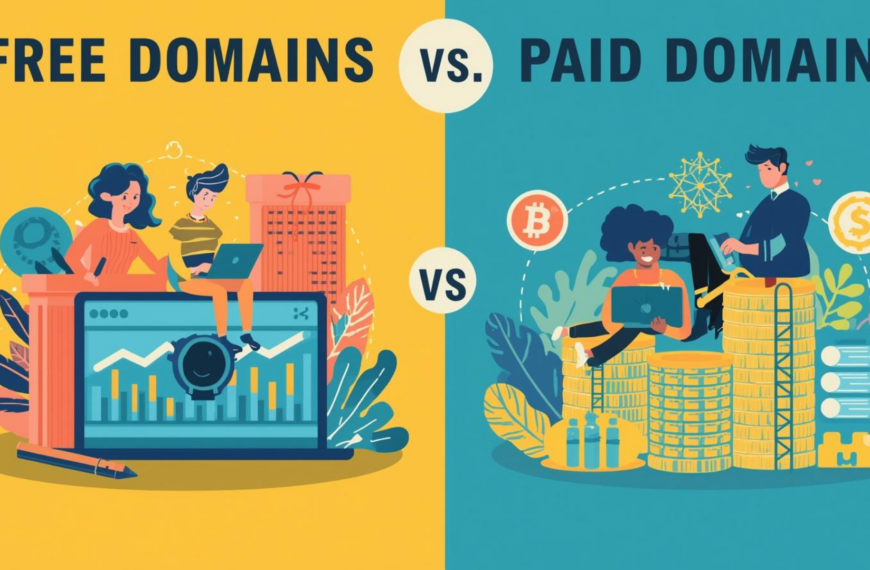
But if the budget is tight, and you need a domain to get online quickly, you can buy a web hosting plan and get a free domain for a full year.
6) SEO Implications
Google has stated that domain extensions don’t directly affect rankings. A .com and a .in have the same ranking potential.
However, country-specific extensions like .in can perform better for local searches within that country. So, if you’re targeting Indian customers, .in gives you a slight edge.
That said, quality content and user experience matter far more than your extension.
7) Future Growth Plans
Think long-term.
If you plan to expand beyond India, starting with .in might limit you later. You’ll either need to rebrand or buy the .com version down the line.
But, if you’re unsure about plans, .com is the safest bet. It’s flexible and works globally.
Final Words
Your domain extension is part of your brand identity. For example:
- .in works best if you’re focused on India. It builds local trust and helps with SEO.
- .com is the global standard and carries maximum credibility worldwide.
- .co.in is a solid middle ground for Indian businesses.
- .org fits non-profits and community organizations.
- Industry-specific extensions like .online, .shop, .tech, and others work if you want to stand out in a niche.
The key is aligning your extension with your business goals and customer expectations.
At Truehost, we make domain registration simple.
You can register .in, .com, .co.in, and more at transparent prices with no hidden fees. Plus, we include free DNS management and 24/7 support.
Ready to register your domain? Browse our domain options and secure your online identity today.