 Web HostingBudget-friendly shared hosting plans
 Domains SearchFrom .com to unique country domains, explore and register extensions worldwide.
 WordPress HostingPower your blog or business with WordPress hosting.
 Email HostingSimple, secure email hosting that helps you stay connected and professional.
 Reseller HostingStart your own hosting business with easy and reliable reseller hosting plans.
 AffiliateJoin our affiliate program and earn commissions every time you bring in new customers.
 cPanel HostingHosting powered by cPanel, the world’s most user-friendly control panel.
 Windows HostingBuilt for Windows applications and websites
 IN Domain PricesDon’t miss out on the best domain deals in India!
 WHOIS LookupFind out who owns a domain name with a quick and easy WHOIS search.
 Domain TransferTransfer your domain to us and enjoy reliable support every step of the way.
 .Com DomainGet the most trusted domain for worldwide credibility
 All TldsSearch and register domain extensions worldwide.
 SSL CertificatesProtect your website with trusted SSL certificates and keep customer data safe.
 VPS HostingPowerful virtual servers. Full root access. Reliable uptime.
 Managed VPS HostingNot a tech expert? Choose our fully managed VPS service.
 Dedicated ServersTake full power and total control of your own physical server.
 AI Website BuilderCreate stunning websites instantly with our easy AI builder.
 Online ShopBuild your eCommerce store easily, no coding, just growth.
 Web Design ServicesGet a website built for your brand and designed for your goals.
 Contact UsReach out to us for support or questions.
 SupportGet answers and how-to guides for all our services.
 BlogRead our latest blogs on web hosting, online business, digital marketing, and other helpful topics.
So, you’ve built your e-commerce store or you’re in the process of building one.
And you’re wondering how you will actually collect money from your customers.
It sounds simple, but choosing the wrong payment gateway can quietly kill your business.
With dozens of options available in the Indian market, it’s genuinely difficult to know where to start. That’s exactly why this guide exists.
By the end, you’ll know 5 popular payment gateways for Indian e-commerce, what sets each one apart, and how to pick the right one.
Why Does Choosing the Right Payment Gateway Matter?
A payment gateway is the digital equivalent of a point-of-sale machine in a physical store.
It’s the technology that captures your customer’s payment information and securely transmits it to the relevant financial institutions to process the transaction.
Here’s why choosing the right payment gateway matters:
a) Checkout experience directly affects conversions – A clunky, slow, or unfamiliar payment page causes cart abandonment. A smooth, trusted checkout keeps customers moving forward.
b) India’s payment landscape is uniquely diverse – Your customers pay via UPI, credit/debit cards, net banking, EMI, and wallets. A gateway that doesn’t support all of these leaves money on the table.
c) Transaction fees compound over time – Even a 0.5% difference in fees can amount to lakhs of rupees annually once your volume scales.
d) Settlement speed impacts your working capital – If you’re restocking inventory or running ad campaigns, waiting 5–7 days for settlements versus same-day settlements is a significant operational difference.
e) Security and compliance protect you legally – Non-compliant gateways expose you to fraud liability and regulatory issues under RBI guidelines.
f) Reliability affects your brand reputation – Frequent payment failures frustrate customers and erode trust in your store.
Key Factors to Consider When Choosing a Payment Gateway
Before going into specific recommendations, here’s your evaluation checklist:
a) Payment Methods Supported
India has a highly fragmented payments ecosystem.
Your gateway must support:
- UPI (the dominant payment method)
- All major credit and debit cards
- Net banking across major banks
- Popular wallets (Paytm, PhonePe, Amazon Pay)
- EMI options (both bank EMI and cardless EMI for affordability)
b) Transaction Costs
Most gateways charge a percentage of each transaction (Merchant Discount Rate) plus setup fees and annual maintenance charges.
UPI transactions are typically free or near-free, while card transactions usually carry a fee of 1.5%-2.5%.
Always calculate the total cost of ownership, not just the headline rate.
c) Settlement Speed
Standard settlement cycles in India range from T+1 (next business day) to T+3 or more.
Some gateways offer instant or same-day settlements, often at an additional fee. If you’re a business with tight cash flows, this factor can be a dealbreaker.
d) Success Rates and Reliability
High uptime (99.9%+) and strong transaction success rates are non-negotiable. A gateway with frequent downtime or high failure rates costs you real revenue.
Look for published SLAs and independent reviews from merchants.
e) Ease of Integration
Does the gateway offer well-documented APIs?
Are there ready-made plugins for platforms like WooCommerce, Shopify, or Magento?
A smooth integration process saves your development team significant time and reduces the chances of bugs at checkout.
f) Security and Compliance
Your gateway must be PCI-DSS compliant, support 3D Secure authentication, and adhere to RBI’s data localization and tokenization mandates.
These aren’t optional. They protect both you and your customers.
g) Customer Support
When a payment fails or a dispute arises, you need responsive support.
Evaluate whether the gateway offers 24/7 support, the quality of their documentation, and whether they have a dedicated account manager for growing businesses.
h) Scalability and Advanced Features
As your business grows, you may need features like:
- Subscription billing
- International payments
- Smart routing
- Fraud detection
- Split payments for marketplaces
Choose a gateway that can grow with you, not one you’ll outgrow in 12 months.
Top 5 Payment Gateways for Your Indian e-commerce Site
Using the criteria discussed above, let’s take a closer look at five of the best payment gateways for Indian e-commerce businesses.
1) Razorpay
Razorpay is arguably the most popular payment gateway among Indian e-commerce businesses today.
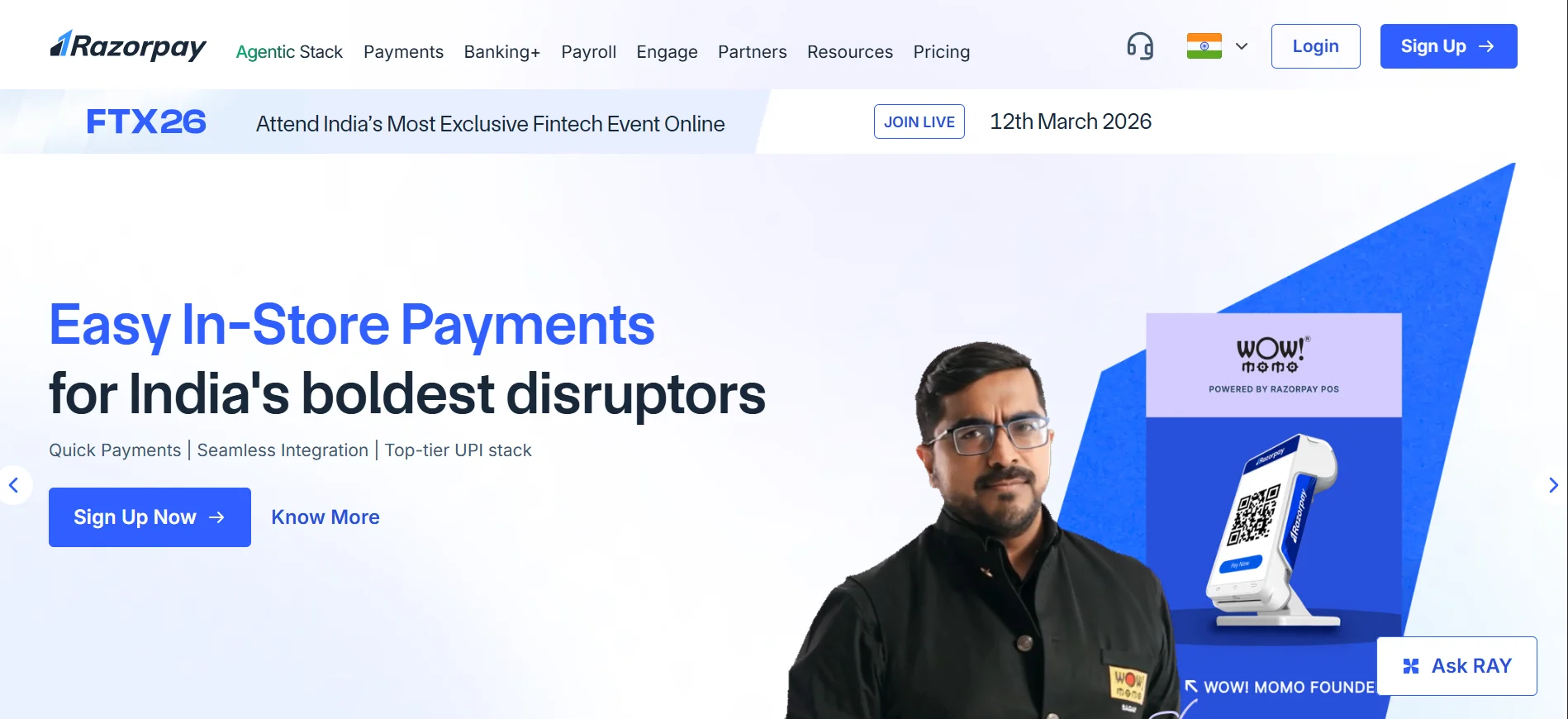
Best for: Startups, growing e-commerce businesses, and tech-forward teams.
Payment Methods: Supports UPI, 100+ banks for net banking, all major credit/debit cards, EMI (bank and cardless), and wallets, including Paytm and Amazon Pay.
Transaction Costs: Standard rate starts at 2% per transaction. UPI and RuPay debit card transactions are charged at 0%. Custom pricing is available for high-volume merchants.
Settlement Speed: Standard T+2 settlement, with an instant settlement feature available for an additional fee of 0.45%.
Success Rates: Razorpay is known for its smart retry logic and intelligent routing, which significantly boosts payment success rates.
Integration: Excellent developer documentation, SDKs for all major languages, and plugins for Shopify, WooCommerce, Magento, and more. Setup can be done in hours.
Security: PCI-DSS Level 1 compliant, supports 3D Secure, and fully compliant with RBI tokenization norms.
Customer Support: 24/7 chat and email support. Dedicated relationship managers for high-volume accounts.
Advanced Features: Razorpay shines here. Subscription billing, payment links, invoicing, smart collect for B2B payments, fraud detection (via Razorpay Shield), and a full-featured dashboard with analytics.
2) PayU India
PayU has been in the Indian market for over a decade and processes billions of dollars in transactions annually, making it one of the most trusted names in the space.
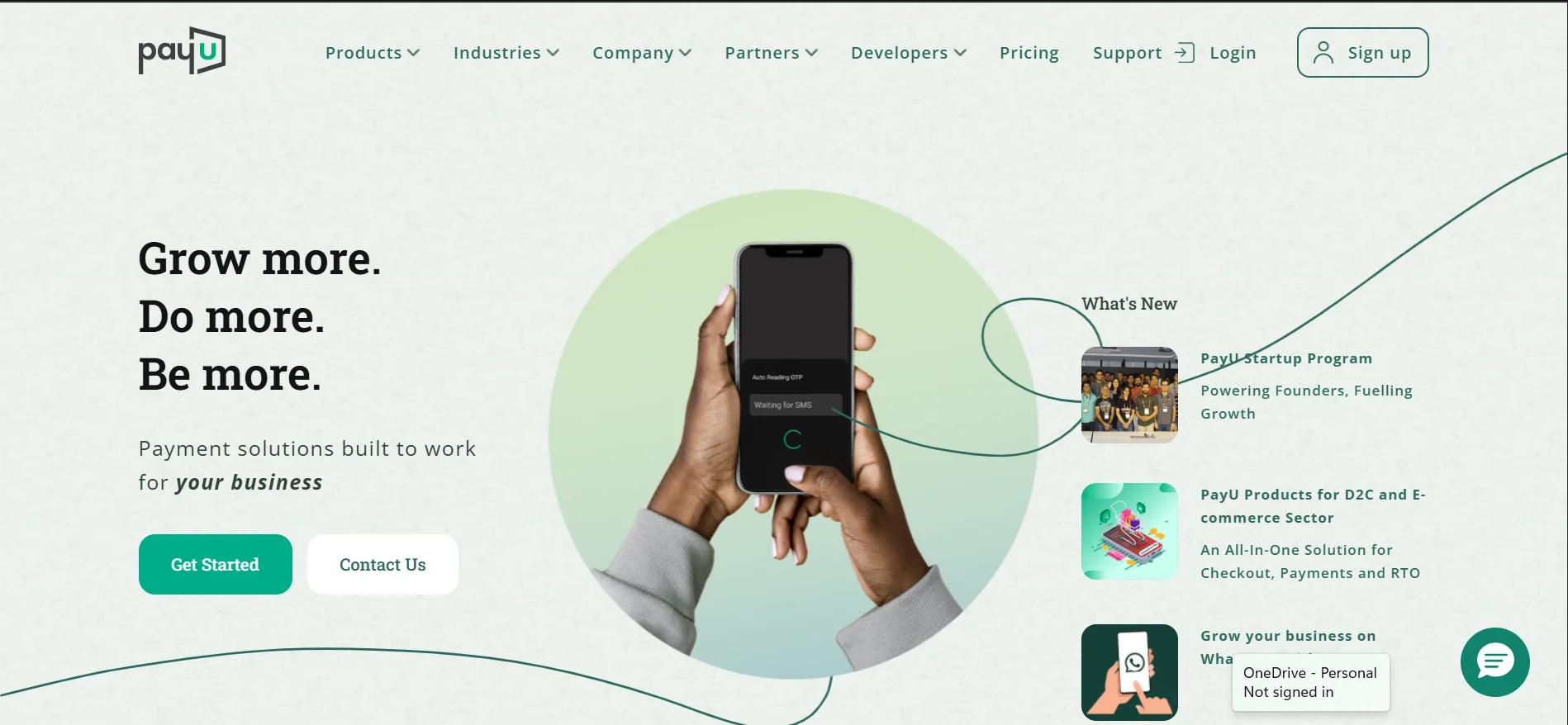
Best for: Established businesses needing a reliable, feature-rich gateway.
Payment Methods: UPI, cards, net banking across 150+ banks, wallets, and EMI options, including cardless EMI via LazyPay (PayU’s BNPL product).
Transaction Costs: Starts at 2% for most payment methods. There’s no setup fee for the standard plan.
Settlement Speed: T+2 standard settlement, with faster settlement options available.
Success Rates: PayU’s TurboUPI and intelligent routing contribute to consistently high success rates, particularly for UPI transactions.
Integration: Comprehensive API documentation, mobile SDKs, and plugins for major e-commerce platforms. PayU also offers a hosted checkout that requires minimal coding.
Security: PCI-DSS compliant, supports tokenization, and complies fully with RBI mandates.
Customer Support: Dedicated support teams and a well-maintained knowledge base. Enterprise clients receive priority support.
Advanced Features: Offers PayU’s LazyPay (BNPL), subscription billing, international payments in select currencies, and PayU’s fraud and risk management tools.
3) Paytm Payment Gateway
Paytm has over 350 million registered users, making it a powerful gateway for e-commerce businesses looking to tap into a broad, trust-familiar audience.
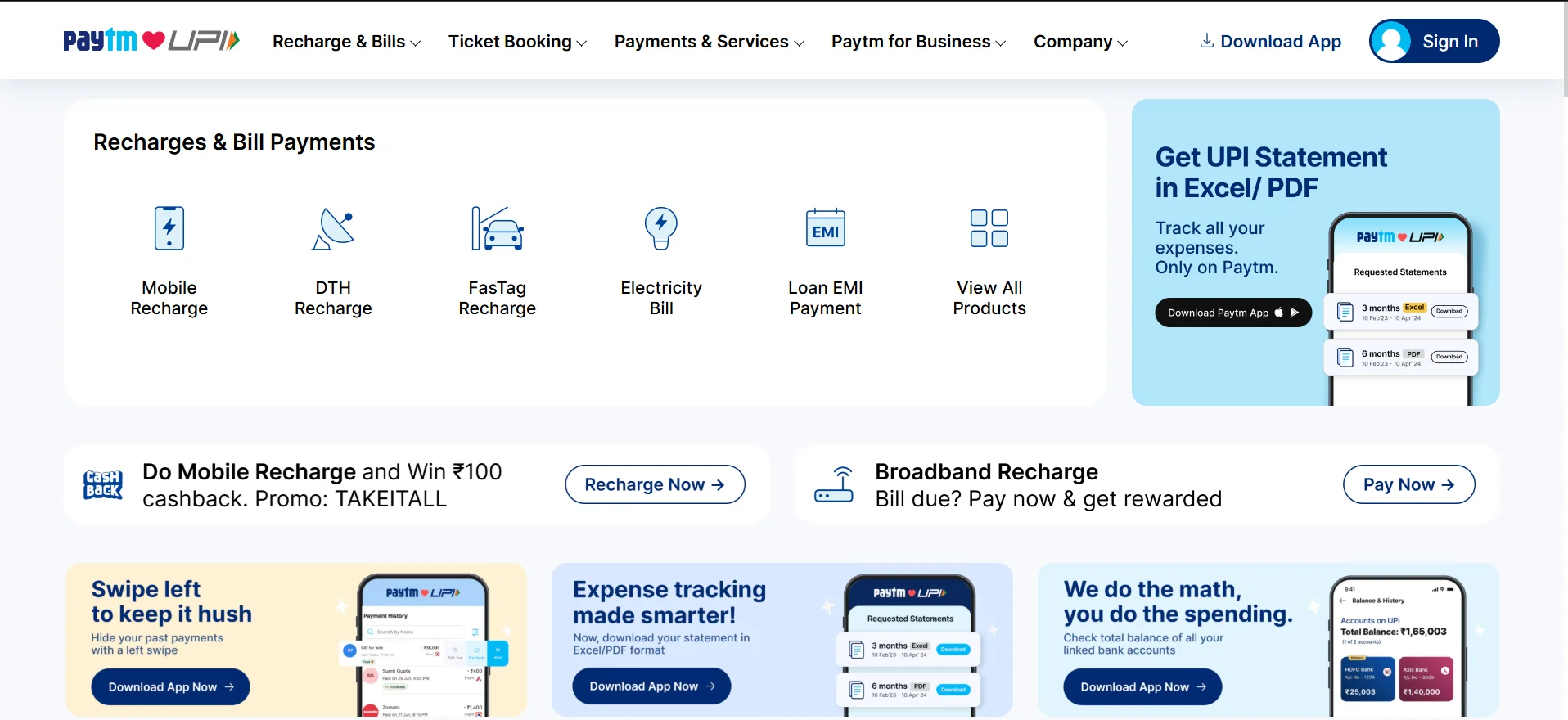
Best for: Businesses targeting Tier 2/3 cities and customers already in the Paytm ecosystem
Payment Methods: UPI, Paytm Wallet (strong advantage), cards, net banking, and EMI options.
Transaction Costs: 0% on UPI and RuPay debit card transactions; approximately 1.99% on credit cards. Custom rates for enterprise.
Settlement Speed: T+1 settlement as standard for most merchants, which is a meaningful advantage for cash flow.
Success Rates: Paytm’s own infrastructure gives it particularly strong success rates for wallet and UPI payments.
Integration: Plugins available for WooCommerce and Shopify. API integration is straightforward, though the developer experience is considered slightly less polished compared to Razorpay.
Security: PCI-DSS compliant, supports 3D Secure, and is compliant with RBI’s tokenization guidelines.
Customer Support: 24/7 support via chat and phone. Paytm for Business portal provides a self-serve dashboard.
Advanced Features: Subscription billing, Paytm Postpaid (BNPL), payment links, and QR code payments, particularly useful for businesses with both online and offline presence.
4) CCAvenue
CCAvenue is one of India’s oldest and most established payment gateways. It remains relevant due to its unmatched breadth of payment options.
Best for: Businesses needing maximum payment method coverage and multi-currency support
Payment Methods: 200+ payment options, including all cards, 58+ net banking options, UPI, wallets, and EMI.
Transaction Costs: Slightly higher than competitors (around 2%–3% for cards). There is also an annual maintenance charge to factor in.
Settlement Speed: Standard T+3 settlement, which is slower than most competitors.
Success Rates: Strong and reliable, backed by years of infrastructure investment.
Integration: Plugins available for all major platforms. The integration process is more involved and may require more developer time.
Security: PCI-DSS Level 1 compliant, 128-bit encryption, and full regulatory compliance.
Customer Support: Dedicated support, though response times can be slower compared to newer players.
Advanced Features: Multi-currency processing in 27 currencies (great for international sales), dynamic currency conversion, and a recurring billing module.
5) Cashfree Payments
Cashfree is a younger player but has built a strong reputation, particularly among fintech-adjacent businesses and those needing instant payouts.
Best for: Businesses that prioritise fast settlements and marketplace/platform models
Payment Methods: UPI, cards, net banking, wallets, app-based payments, and EMI.
Transaction Costs: Competitive rates starting at 1.75% for cards; UPI is free. One of the more cost-effective options available.
Settlement Speed: This is Cashfree’s standout advantage. Instant settlements and same-day settlements are available, making it ideal for businesses with high working capital needs.
Integration: Clean, modern API documentation. Plugins for WooCommerce, Shopify, and other platforms. Quick onboarding with minimal paperwork.
Security: PCI-DSS compliant, tokenization support, and bank-grade encryption across all transactions.
Customer Support: Responsive email and chat support; dedicated account managers for enterprise clients.
Advanced Features: Split payments (ideal for marketplaces), bulk payouts, vendor payments, subscription management, and a powerful verification suite for KYC (a strong choice for platforms that handle payouts to vendors or freelancers).
Quick Comparison Table
| Feature | Razorpay | PayU India | Paytm | Cashfree | CCAvenue |
|---|---|---|---|---|---|
| Card Transaction Fee | 2% | 2% | 1.99% | 1.75% | 2–3% |
| UPI Fee | 0% | 0% | 0% | 0% | Charged |
| Settlement Speed | T+2 | T+2 | T+1 | Instant/Same-day | T+3 |
| International Payments | Limited | Yes | No | Limited | Yes (27 currencies) |
| Subscription Billing | Yes | Yes | Yes | Yes | Yes |
| Best For | Startups & tech teams | Established businesses | Tier 2/3 reach | Fast payouts & marketplaces | Max payment coverage |
Other Payment Gateways
The five gateways above cover the vast majority of Indian e-commerce use cases, but they’re certainly not the only options.
Depending on your business model, you might also consider:
a) Stripe – Excellent for businesses selling internationally or those with strong developer teams; not as optimized for domestic Indian UPI flows.
b) Instamojo – A great entry-level option for solo entrepreneurs, creators, and small businesses; simpler feature set, but very easy to get started.
c) PhonePe Payment Gateway – Leverages PhonePe’s massive UPI user base, gaining traction among e-commerce merchants.
d) Airpay – A solid option for omnichannel businesses with both online and offline payment needs.
e) PayTabs – Worth considering for businesses with significant Gulf/MENA international traffic alongside domestic sales.
Conclusion
Choosing the right payment gateway is one of the most consequential decisions you’ll make as an e-commerce business owner in India.
Get it right, and you’ll offer a seamless checkout experience that converts browsers into buyers. Get it wrong, and you’ll spend months dealing with failed transactions, unhappy customers, and unexpected costs.
Important Note: Before you integrate a payment gateway, make sure your store is built on a fast, reliable foundation. At Truehost, we offer an e-commerce site builder, e-commerce-ready hosting plans, and everything you need to go live with confidence.
Visit our homepage to learn more.